How to Thaw Frozen Meat Safely: 3 Methods Every Home Cook Should Know
You planned dinner. You remembered the vegetables. You even know exactly how you want to season the chicken. There’s just one problem: the chicken is still frozen solid.
So what do you do?
Leave it on the counter for a few hours? Run it under warm water? Toss it in the microwave and hope for the best?
Thawing meat seems simple, but it’s one of those everyday kitchen tasks where a shortcut can quickly become a food-safety problem. The good news is that safely thawing frozen meat doesn’t have to be complicated.
There are three safe ways to thaw frozen meat: in the refrigerator, in cold water, or in the microwave. Of the three, refrigerator thawing is the method I recommend whenever you have enough time to plan ahead.
Affiliate Disclosure: This post may contain affiliate links. If you make a purchase through one of these links, I may earn a small commission at no additional cost to you. I only recommend products I believe can genuinely be useful in the home kitchen.
So, What Is the Safest Way to Thaw Frozen Meat?
Thaw it in the refrigerator.
It isn’t the fastest method, but it’s the most hands-off and reliable because the meat stays at a consistently cold temperature while it defrosts. Keep your refrigerator at 40°F or below.
Put the frozen meat on a plate, rimmed sheet pan, or shallow container and place it toward the bottom of the refrigerator. The container catches any juices that may leak from the package and helps prevent cross-contamination with other foods.
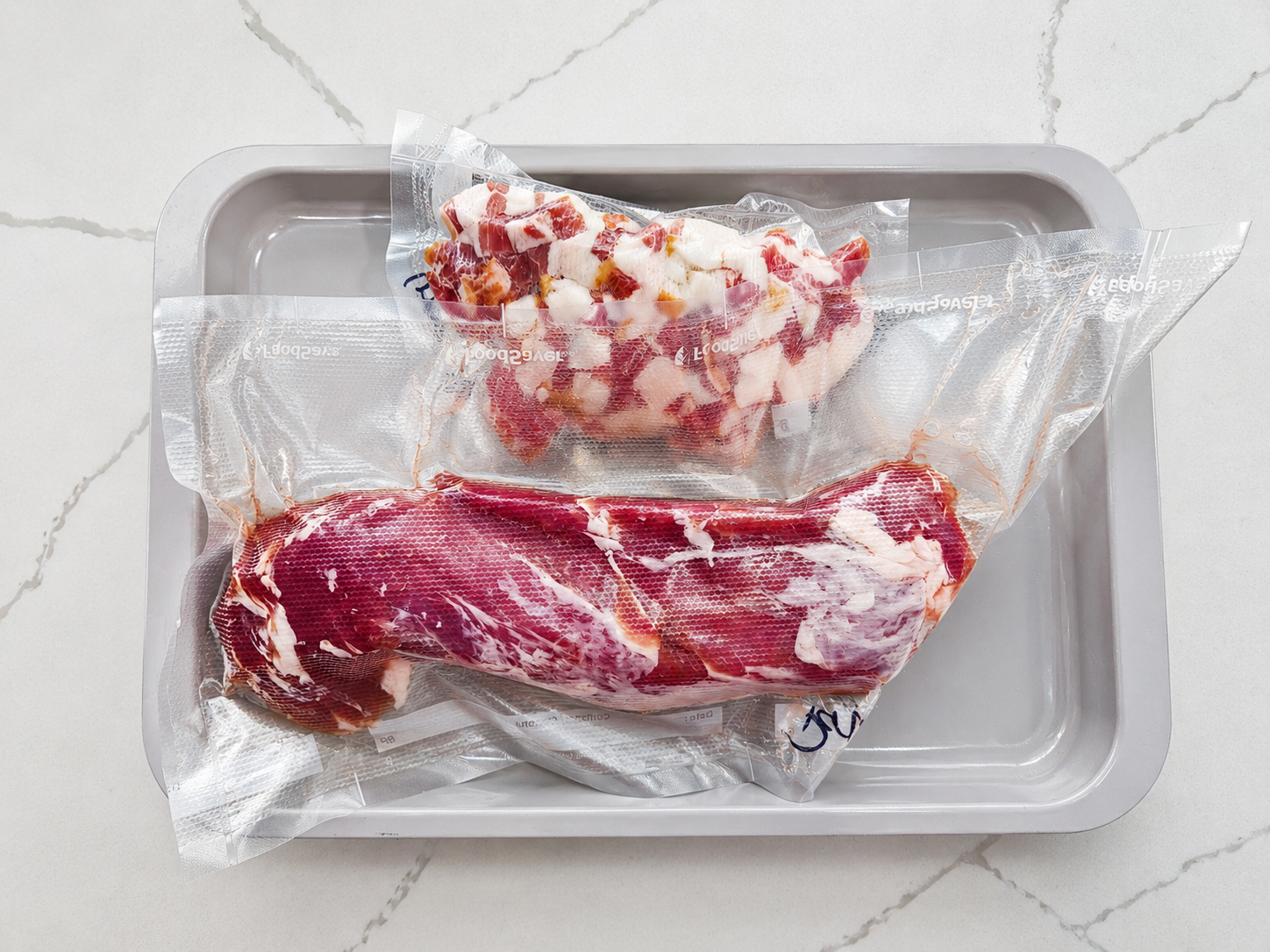
Vacuum-sealed raw meat portions arranged on a rimmed tray over a white marble countertop before thawing.
Chef Take
When I have the choice, I thaw in the refrigerator every time. It requires almost no effort, gives the meat time to thaw evenly, and gives you much more flexibility if dinner plans suddenly change.
The downside? You have to remember to do it. And yes, even chefs occasionally look into the freezer at 4:30 p.m. and realize dinner is still an ice block.
Method 1: Refrigerator Thawing: The Best Overall Method
The simplest routine is to move tomorrow’s meat from the freezer to the refrigerator the night before you need it.
Smaller packages may thaw overnight, while chicken pieces, whole chickens, large roasts, and other thick cuts can take a day or longer. USDA guidance notes that chicken breasts, bone-in pieces, and whole chickens may require one to two days or longer depending on their size.
How to do it:
Keep the meat wrapped or place it in a sealed container.
Set it inside a rimmed plate, pan, or tray.
Place it on a lower refrigerator shelf.
Allow enough time for it to thaw completely.
Cook within the appropriate refrigerated storage window.
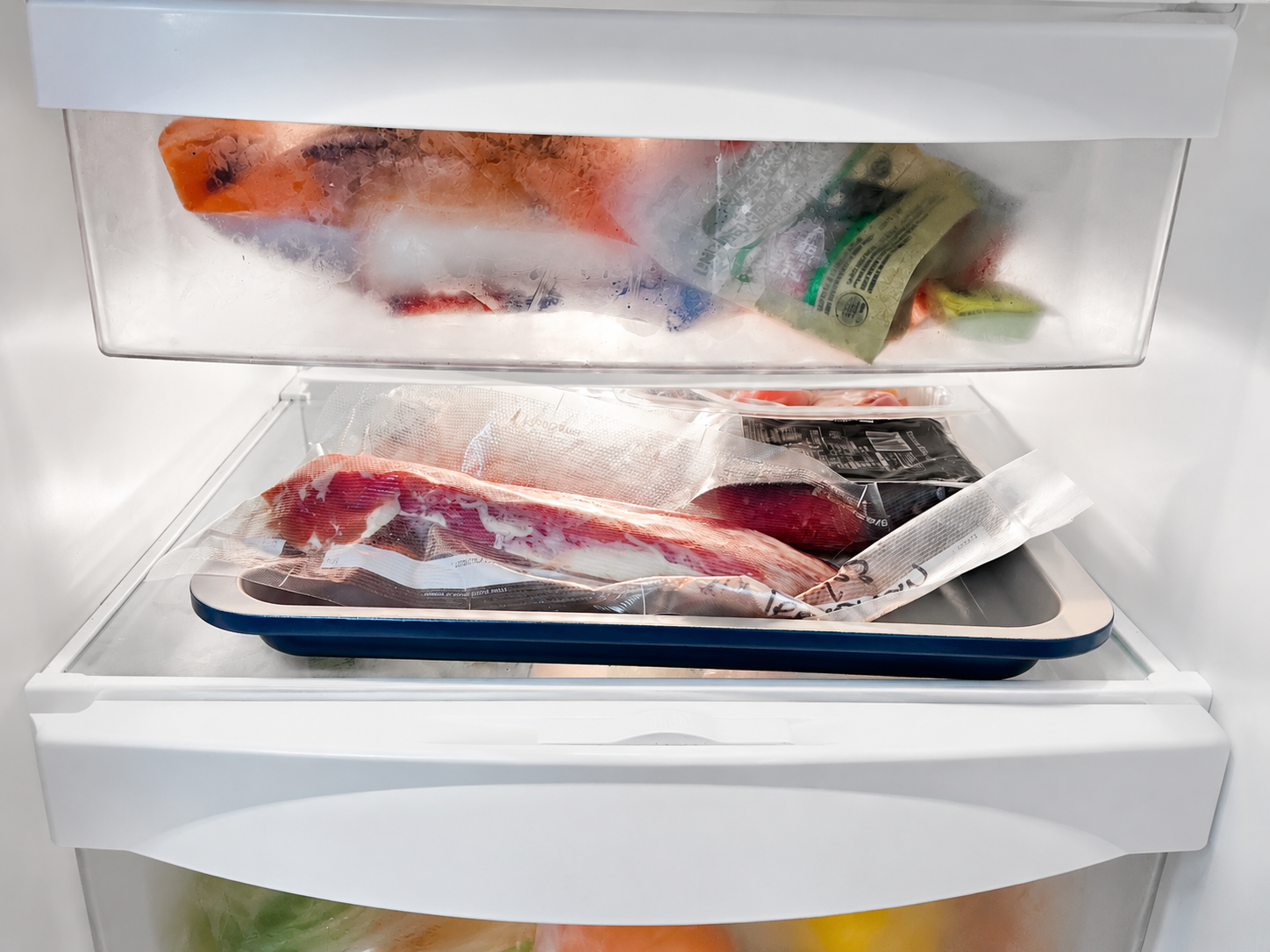
Vacuum-sealed raw meat stored on a tray on the bottom shelf of a refrigerator for safe thawing.
As a general guide, raw poultry and ground meats should typically be cooked or frozen within 1–2 days, while many whole cuts of beef, pork, lamb, and veal can be refrigerated for about 3–5 days.
Another advantage: you can change your mind.
If meat was safely thawed in the refrigerator, USDA guidance says it can generally be refrozen without cooking it first, although you may notice some quality loss from moisture released during thawing.
That makes refrigerator thawing especially useful when meal plans aren't set in stone.
Method 2: Cold-Water Thawing: When You Forgot to Plan Ahead
Forgot to move the meat to the refrigerator?
This is the method I’d use next. Cold-water thawing is much faster than refrigerator thawing, but it requires more attention.
How to safely thaw meat in cold water:
Make sure the meat is inside a leak-proof package or food-safe bag.
Completely submerge the package in cold tap water.
Change the water approximately every 30 minutes so it remains cold.
Once thawed, cook the meat immediately.
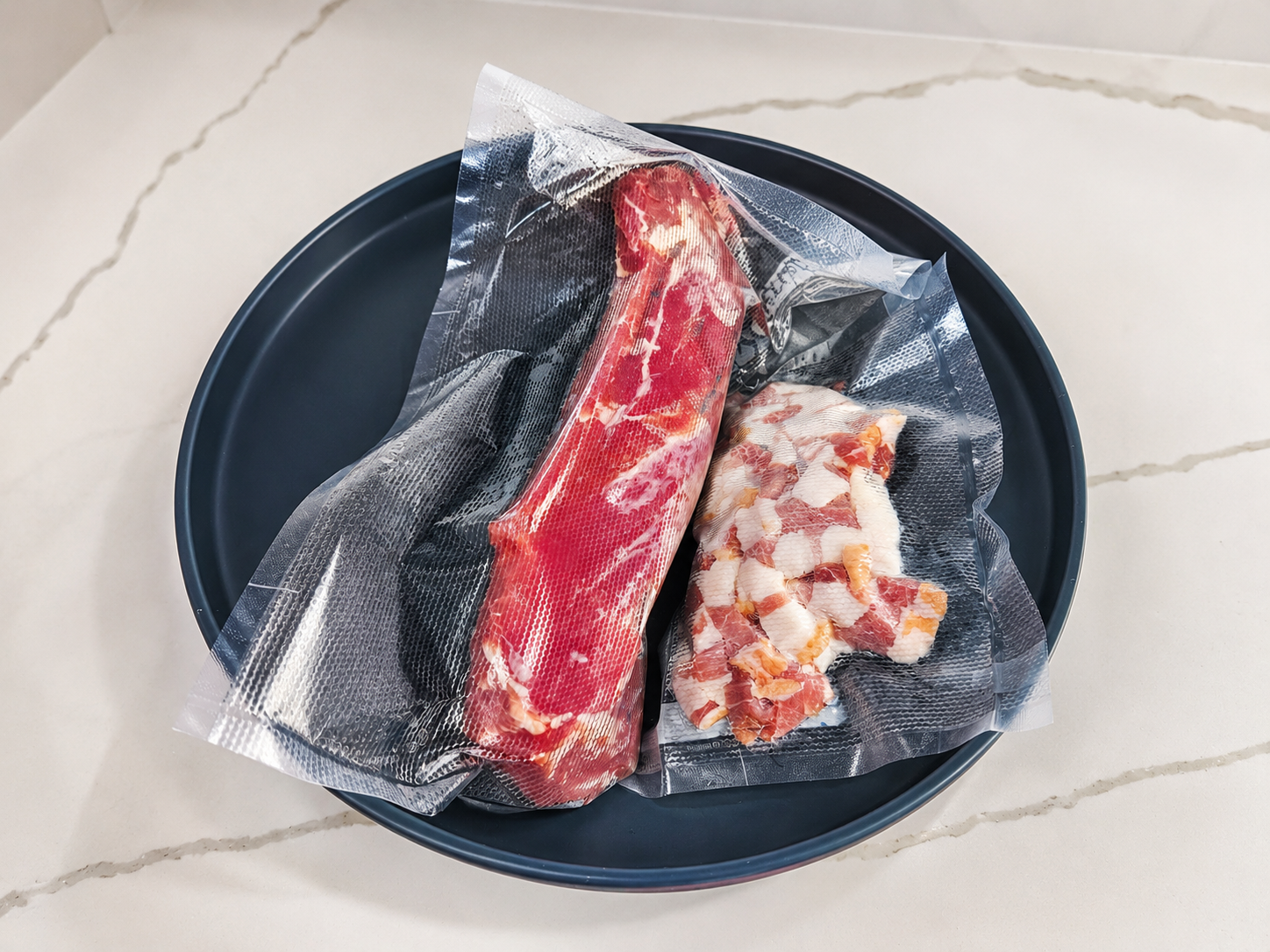
Vacuum-sealed raw meat portions placed inside a bowl, submerged in cold water for safe thawing.
A one-pound package of boneless chicken breasts, for example, can thaw in approximately an hour or less, while a three- to four-pound package may require two to three hours.
Chef Take
If dinner is approaching and I forgot to thaw something, cold water is my preferred rescue method, and I place a bowl on top to keep the meat fully submerged. But don't confuse cold water with whatever temperature comes out of the faucet fastest.
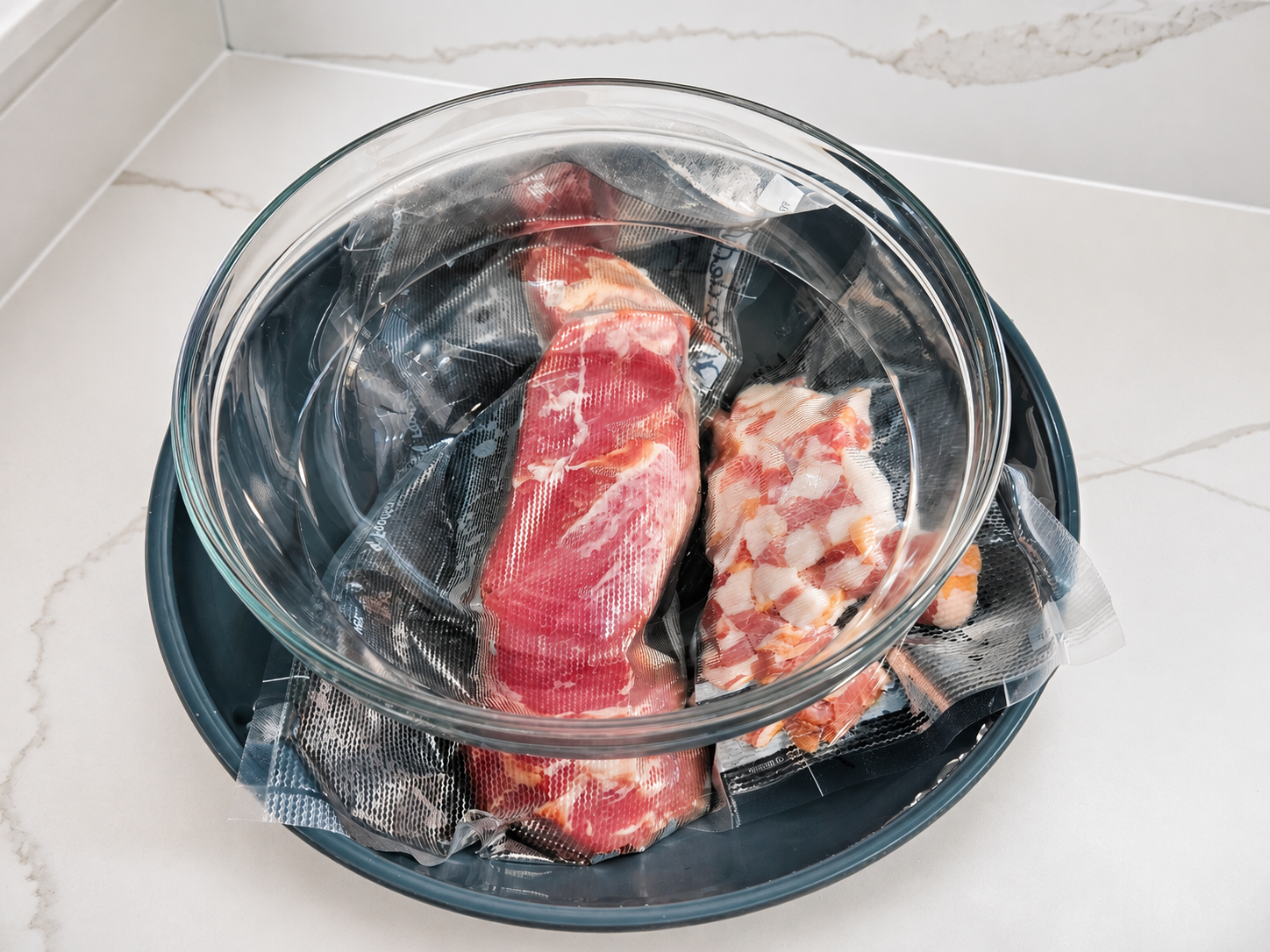
Vacuum-sealed raw meat portions placed inside a bowl, submerged in cold water, with a glass bowl on top for safe thawing.
Warm water may seem like a clever shortcut. It isn't.... Keep it cold.
Method 3: Microwave Thawing: The Emergency Option
Then there are the nights when you don't have several hours. That's where the microwave comes in.
Use your microwave's defrost setting and follow the manufacturer's directions for the weight and type of meat you're thawing.
There's one important catch:
If you microwave-thaw meat, cook it immediately.
Microwave thawing can begin warming, or even partially cooking, some areas of the meat while other areas remain frozen. Because portions of the food can enter temperatures where bacteria multiply more rapidly, FDA and USDA guidance recommends cooking it immediately after microwave thawing.
I consider the microwave a perfectly acceptable food-safety method. I just don't consider it the best culinary method.
Why? Uneven thawing can make it harder to cook meat evenly later.
Chef Take
Safe doesn't always mean ideal. If I'm making a beautiful steak or another cut where texture and even cooking really matter, I'm going to avoid microwave thawing whenever possible.
Ground meat going directly into chili on a Tuesday night? Different story. Use the tool that makes sense for the meal.
The One Place You Should Never Thaw Meat: The Kitchen Counter
This is probably the most important takeaway from this entire article:
Don't thaw frozen meat on the counter.
It may be the way you grew up seeing it done. It may even be something you've done dozens of times without getting sick. That doesn't make it a safe method.
As frozen meat sits at room temperature, the outside can warm significantly while the center remains partially or completely frozen.
That outer portion can enter what food-safety professionals call the Temperature Danger Zone: approximately 40°F to 140°F, where bacteria can multiply rapidly. Perishable foods should not be left at room temperature for more than two hours.
So a chicken breast can still feel frozen in the middle while the surface has already spent too much time at an unsafe temperature.
And don't use hot water either.
USDA guidance specifically warns against thawing perishable foods on the counter or in hot water. Hot water speeds up exactly the part of the process you don't want accelerated: warming the exterior while the interior stays frozen.
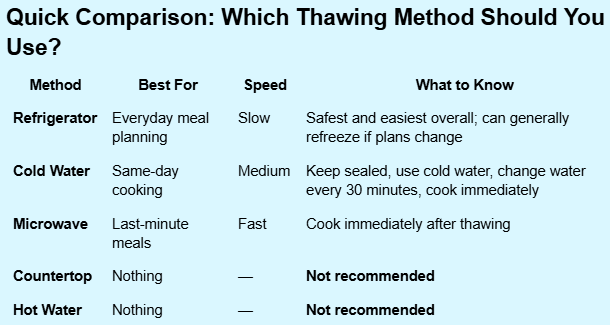
chart comparing the three safest thawing methods for meats
What If the Meat Is Still Slightly Frozen?
Dinner isn't necessarily ruined.
Many meats and poultry can be safely cooked from the frozen state, although cooking will generally take longer. USDA guidance notes that cooking from frozen can require roughly 50% more cooking time in some applications.
The important part isn't whether the meat started frozen. It's whether the finished food reaches its proper safe internal temperature.
This is where a reliable instant-read food thermometer earns its place in your kitchen. Rather than relying only on color, texture, or cooking time, use temperature to confirm doneness.
I have two Javelin Ultra-Fast 3-Second Digital Instant Read Meat Thermometers that have been my steady go-to for the past 10 years. It has a modern compact design, and it's magnetic, so you don't have to worry about misplacing it.
Can You Refreeze Meat After Thawing It?
Sometimes.
Thawed in the refrigerator?
Yes, generally. Meat that remained safely refrigerated during thawing can typically be refrozen without cooking, although its texture may be slightly affected.
Thawed in cold water?
Cook it before refreezing.
Thawed in the microwave?
Cook it before refreezing.
USDA specifically recommends immediately cooking foods thawed using the cold-water or microwave methods before refreezing them.
A Better Habit: Think About Tomorrow's Dinner Tonight
Most food-safety shortcuts happen because we're trying to solve a time problem. So instead of becoming better at emergency thawing, become better at remembering one meal ahead.
When you're cleaning up after dinner tonight, ask yourself: “What's for dinner tomorrow?” If the answer includes frozen meat, move it to the refrigerator right then.
Ten seconds of planning tonight can eliminate the frantic 5:00 p.m. debate between frozen chicken, a microwave, and takeout.
The Bottom Line
You don't need a gadget or culinary trick to safely thaw frozen meat. You need the right temperature and a little planning.
Whenever possible: Freezer → Refrigerator → Cook.
If you're short on time: Freezer → Cold Water → Cook Immediately.
If you're really short on time: Freezer → Microwave → Cook Immediately.
But skip the countertop and hot water completely.
Food safety isn't about being afraid of your ingredients. It's about understanding how to handle them so you can concentrate on the part that's actually fun: making them taste great.
The 30-Second Chef Check
Before you thaw tonight's dinner, take 30 seconds and check:
Is the meat thawing in the refrigerator, cold water, or microwave?
If it's in the refrigerator, is it sitting on a plate or tray that can catch leaks?
Is your refrigerator staying at 40°F or below?
If you're using cold water, are you changing it every 30 minutes?
If you're using cold water or the microwave, are you prepared to cook the meat immediately?
Is anything currently thawing on the counter? Move it.
Chef habit to build this week: Before going to bed, check tomorrow's menu and move anything that needs thawing from the freezer to the refrigerator.
Thirty seconds tonight can make tomorrow's dinner safer, and a whole lot easier.