Best Chef Knives for Every Budget (2026): 8 Picks From a Professional Chef
A good chef’s knife can completely change the way you cook, but you do not have to spend $300 to get a great one. I’ve cooked professionally for years, and my own knife collection proves that point.
My knife roll includes everything from a Mercer Culinary Genesis 9-inch chef’s knife to Shun Premier chef’s knives, along with a compact Henckels Forged Accent 5-inch chef’s knife, a Kyocera ceramic santoku, and an 8.2-inch F. Dick chef’s knife that I’ve owned for more than 20 years.
And here's what years of using different knives has taught me: Price matters, but fit, balance, blade shape, maintenance, and how you actually cook matter more.
Some days I want the substantial feel of my F. Dick. Other times I reach for my 6-inch Shun because I want something smaller and nimble. And yes, I own a ceramic Kyocera santoku mostly because I simply wanted one. Sometimes, kitchen tools are allowed to be fun too.
So instead of telling you there is one universally “best” chef’s knife, this guide will help you figure out which knife gives you the best value for your budget and cooking style.
Disclosure: This post may contain affiliate links. If you purchase through one of these links, I may earn a commission at no additional cost to you. Prices change frequently, so always check current pricing before purchasing.
First: How Much Do You Really Need to Spend?
One of the biggest misconceptions about chef’s knives is that expensive automatically means better. It doesn't. A $200 knife may offer better steel, craftsmanship, balance, edge retention, or finishing than a $50 knife. But that doesn't automatically mean you'll enjoy using it more.
I've owned my F. Dick 8-inch chef’s knife for more than two decades. The fact that it is still part of my kitchen says something important: A well-made knife that fits the cook can stay with you for a very long time.
Meanwhile, my more premium Shun knives give me a completely different cutting experience: lighter, more refined, and more precise. Both have a place.
Here's where I'd start depending on your budget.
Best Budget Chef’s Knife: Mercer Culinary Genesis 9-Inch Chef’s Knife
Best for: Beginners, culinary students, serious home cooks, and cooks who want professional-kitchen performance without premium pricing.
Let's start with a knife I actually own.
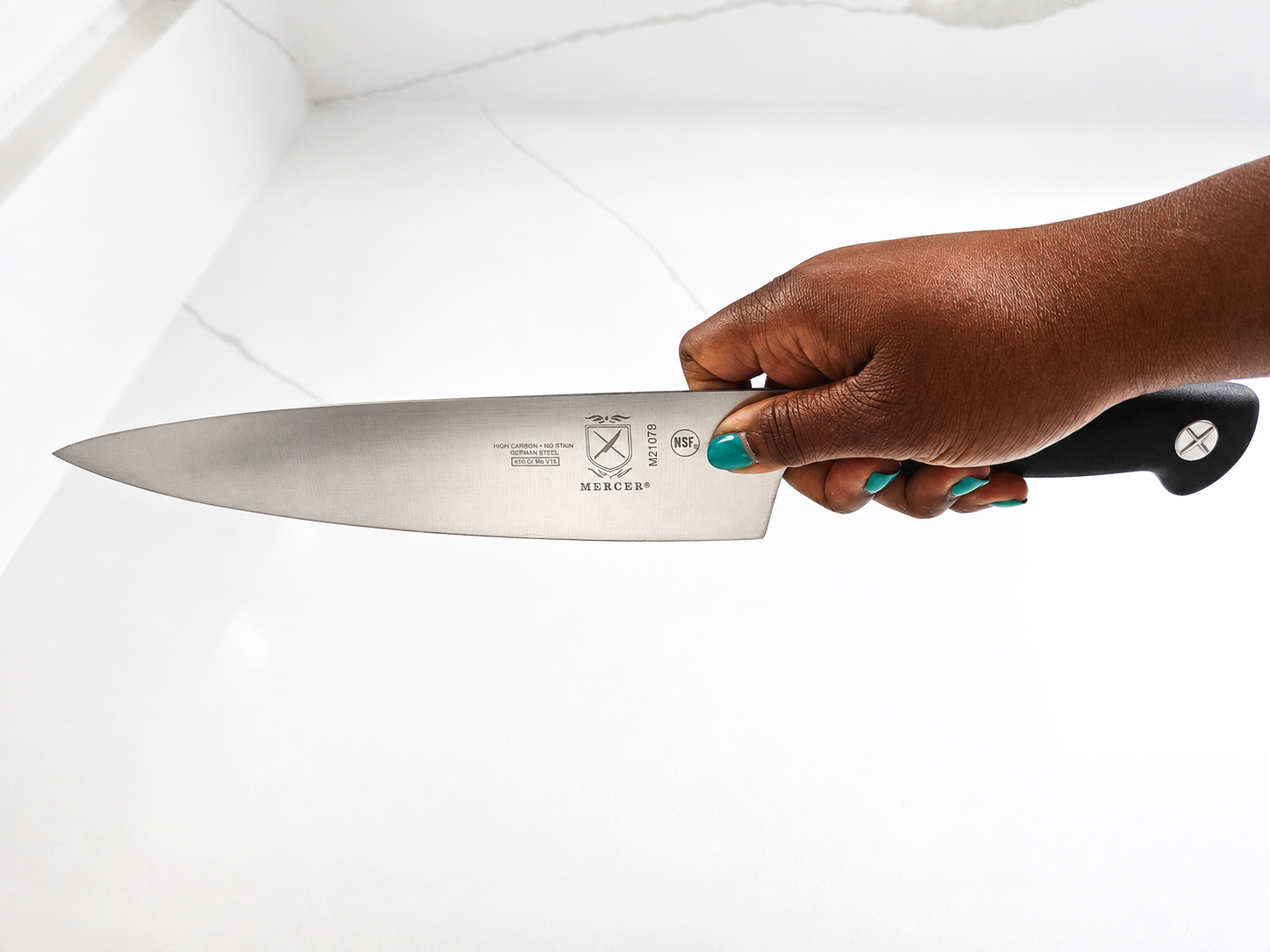
Mercer Genesis 9-inch Chef Knife
My Mercer Culinary Genesis has a 9-inch blade and a short bolster, which gives you plenty of usable cutting edge and allows for easier sharpening toward the heel of the knife.
Mercer knives have a strong connection to culinary training, which is one reason this style of knife feels familiar to so many professional cooks. Fun fact: Mercer is one of those brands you're very likely to encounter around culinary-school kitchens and training environments. And there's a reason. They aren't trying to be jewelry. They're designed to work.
Why I like the Mercer Genesis
Excellent value
Comfortable handle
Professional-kitchen feel
Easy to sharpen and maintain
Short bolster gives you more usable blade
Durable enough for everyday cooking
My version is 9 inches, which gives me a little more blade length than the standard 8-inch chef’s knife. That extra inch is useful when you're doing larger prep jobs, but I wouldn't automatically recommend a 9-inch knife to everyone.
If you're newer to knife work or have smaller hands, an 8-inch version may feel more manageable.
From My Knife Roll
The Mercer is a perfect example of why I don't believe a good knife needs to be expensive. It's functional. It feels like a working knife. And if you're developing your knife skills, I'd rather see you learn on something like this than spend hundreds of dollars on a knife you're afraid to use.
Chef's Take
This is the knife I'd recommend when someone says, “I want a real chef's knife, but I don't want to spend a fortune.”
Best Affordable Everyday Workhorse: Victorinox Fibrox Pro 8-Inch
Best for: Home cooks who want maximum function for their money.
The Victorinox Fibrox Pro has earned a reputation as an everyday workhorse for a reason. It's lightweight, practical, comfortable, and easy to maintain. It doesn't have the polished appearance of a premium forged knife, but that's exactly the point. This is a knife meant to work.
Why consider it
Lightweight
Easy to maneuver
Comfortable non-slip handle
Easy to sharpen
Excellent price-to-performance ratio
If you like the practical nature of my Mercer but want something slightly lighter and more nimble, the Victorinox is worth considering.
Chef's Take
For many home cooks, this is all the chef's knife they'll ever truly need. Spend the money you save on a good cutting board and sharpening.
Best Compact Chef’s Knife: Henckels Forged Accent 5.5-Inch Chef’s Knife
Best for: Smaller hands, quick prep, small cutting boards, and cooks intimidated by an 8-inch blade
Here's another knife from my own collection that proves bigger isn't always better. I own a Henckels Forged Accent 5.5-inch chef’s knife, and I think smaller chef’s knives are seriously underrated.
Most buying guides immediately push everyone toward an 8-inch blade. For many cooks, that's a great starting point. But it isn't a rule.
A 5.5-inch chef’s knife can be incredibly useful when you're:
Cutting smaller vegetables
Chopping herbs
Preparing fruit
Doing quick lunch prep
Working in a small kitchen
Using a smaller cutting board
It can also feel less intimidating if you're still building confidence with knife skills.
From My Knife Roll
One reason I enjoy owning multiple knife sizes is that I don't need the same knife for every task. There are days when pulling out a full-size 8- or 9-inch knife feels unnecessary. A compact chef’s knife gives you many of the same capabilities in a smaller package.
Chef's Take
If you've tried an 8-inch chef's knife and thought, “This feels like a lot of knife,” don't assume chef's knives aren't for you. Try a smaller one.
Best Midrange Chef’s Knife: Misen 8-Inch Chef’s Knife
Best for: Home cooks ready to move beyond entry-level knives
Once you move into the midrange category, you're usually paying for more refinement. The Misen 8-inch chef’s knife sits between traditional Western and Japanese styles, which makes it appealing to home cooks who aren't sure which direction they prefer.
You get a versatile blade profile and a more refined feel without immediately jumping into premium knife pricing.
Why consider it
Versatile shape
Good everyday size
Balanced middle ground between knife styles
More refined than many entry-level knives
Chef's Take
This category is where personal preference starts becoming much more important. Once you're spending more money, don't buy based only on reviews. Pay attention to weight, balance, handle shape, and cutting style.
A Knife I Bought Because I Wanted One: Kyocera Revolution 5.5-Inch Ceramic Santoku
Best for: Lightweight vegetable and fruit prep, and cooks curious about ceramic knives
Okay. Full transparency. I own my Kyocera Revolution 5.5-inch ceramic santoku partly because…
I wanted a ceramic knife. 😂
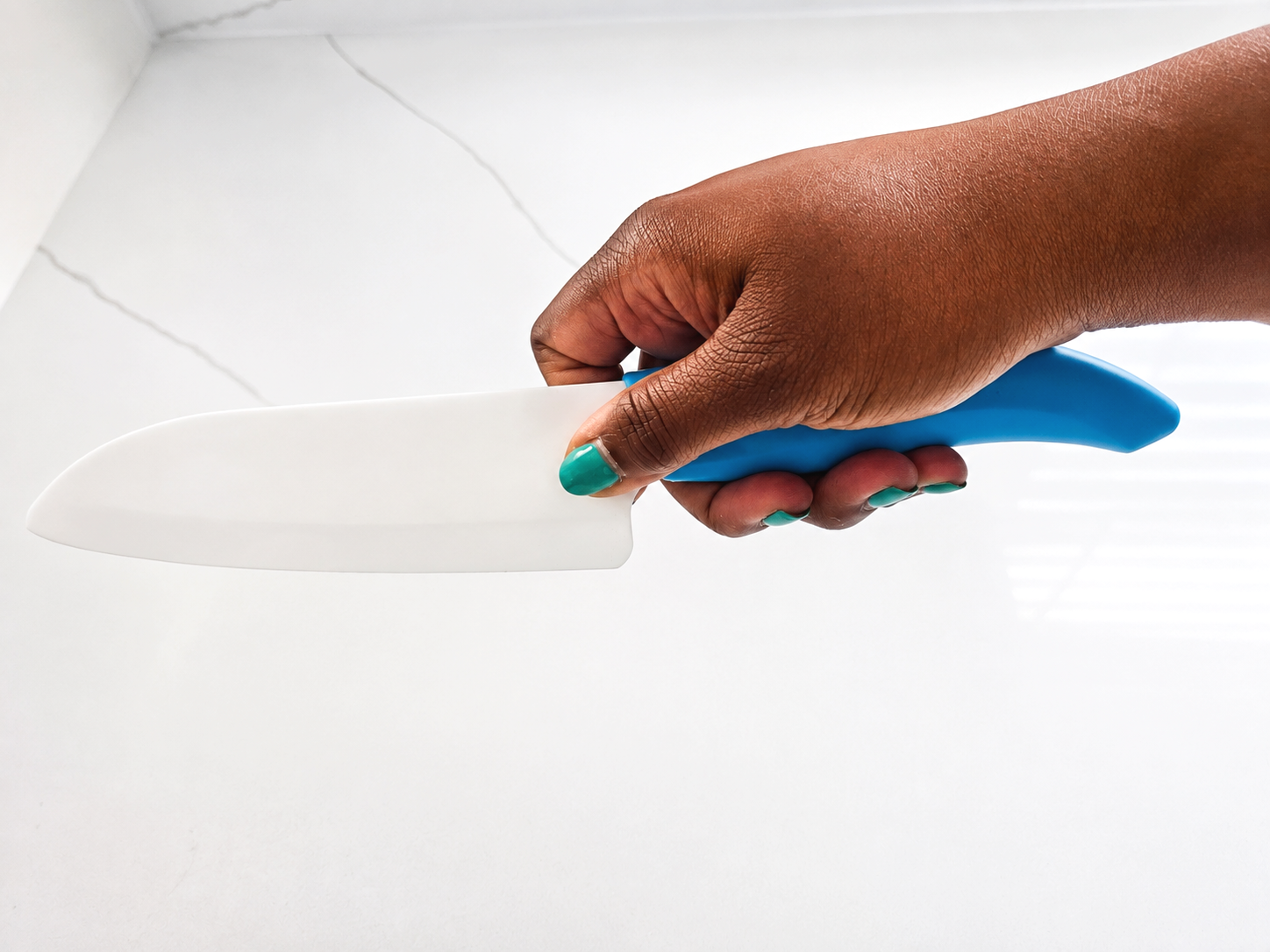
Kyocera Revolution 5.5-Inch Ceramic Santoku
Not every kitchen purchase needs a dramatic origin story. But owning one has also given me firsthand experience with just how different ceramic knives feel compared with traditional steel.
Ceramic blades are extremely lightweight and can feel incredibly sharp during slicing tasks.
I especially like this type of knife for things like:
Fruit
Vegetables
Boneless ingredients
Small precision jobs
But I wouldn't recommend a ceramic santoku as your only chef's knife.
Why?
Ceramic behaves very differently from steel. You don't want to twist the blade through hard ingredients, hit bones, pry with it, or treat it like a heavy-duty kitchen workhorse.
From My Knife Roll
My Kyocera isn't replacing my Mercer, F. Dick, or Shun. That's not its job. It's a specialty knife that happens to be fun to use. And that's something worth remembering when building your kitchen: Not every knife has to do everything.
Chef's Take
Buy your first dependable steel chef’s knife first. Then, if you're curious about ceramic? Go have some fun.
Best Serious-Cook Upgrade: MAC Professional 8-Inch Chef’s Knife
Best for: Cooks who want a lighter, thinner, more precise cutting experience
The MAC Professional is where I'd start looking if you're ready to experience a noticeable difference from a traditional entry-level Western chef's knife. It is thinner and lighter than many German-style knives, which can make vegetable prep feel effortless.
Why consider it
Thin blade
Lightweight
Excellent precision
Great for high-volume prep
Strong introduction to Japanese-style performance
This type of knife begins moving toward the qualities I appreciate in my Shun knives. The cutting experience becomes less about using weight and more about letting a thin, sharp blade do the work.
Chef's Take
Once you've developed good knife skills, thinner blades become incredibly satisfying.
My 20+ Year Workhorse: F. Dick 8.5-Inch Chef’s Knife
Best for: Cooks who value durability, traditional professional-kitchen construction, and long-term ownership
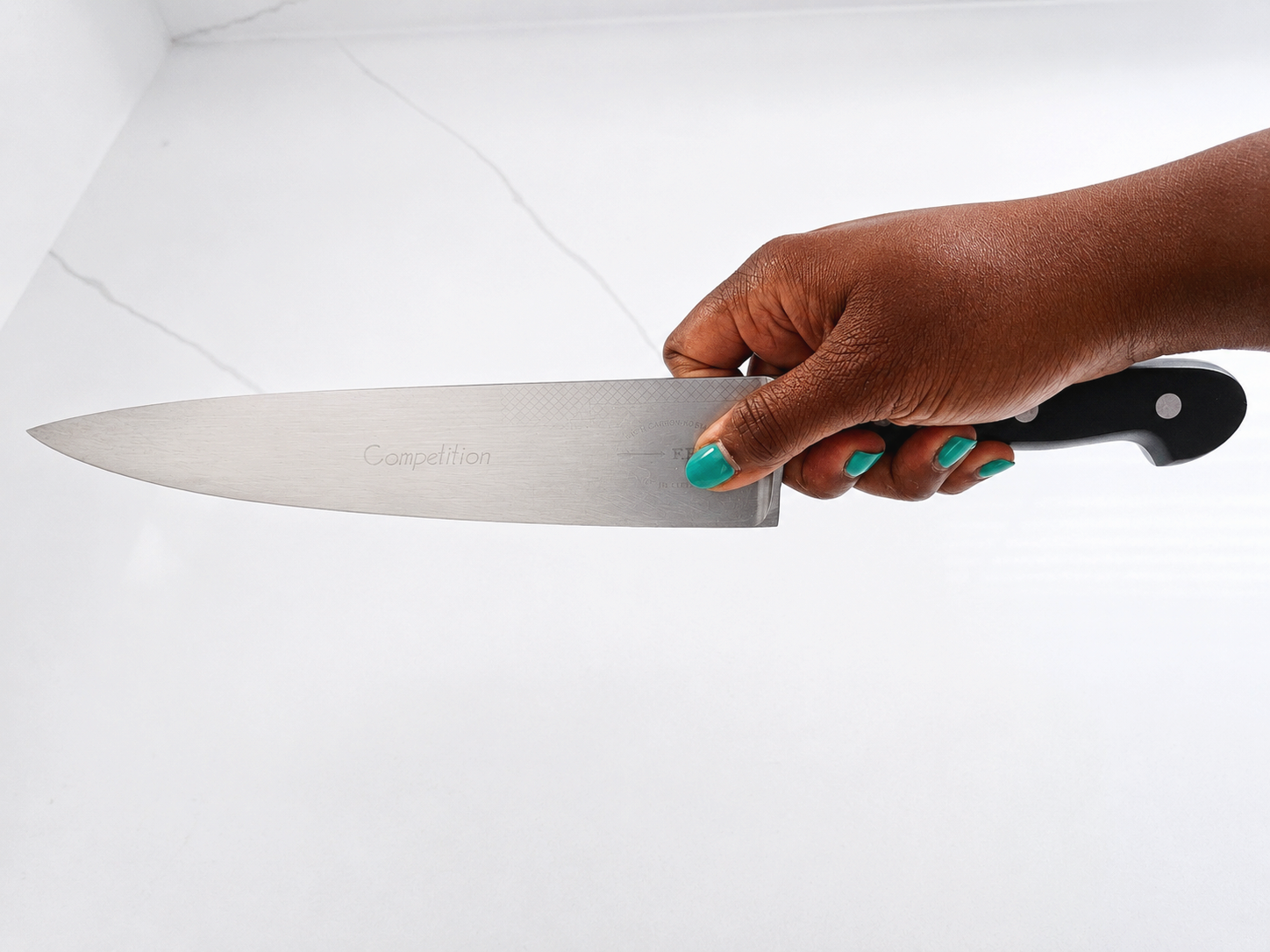
F. Dick 8.5-Inch Chef’s Knife
Here's where this guide gets especially personal. I've owned my 8.5-inch F. Dick chef’s knife for more than 25 years.
Twenty… Five…. Years.
That knife has been around long enough to prove one of the biggest points I want home cooks to understand: A chef's knife doesn't need to be trendy to be excellent.
F. Dick has deep roots in professional cutlery, and my knife has been the type of dependable workhorse that simply keeps doing its job.
What decades of ownership taught me
A knife you maintain can stay part of your kitchen for an incredibly long time. Over the years, the knife naturally develops history. You sharpen it. You learn its balance. You know exactly how it moves.
At some point, you stop thinking about the knife because it simply feels familiar. That matters more than having whatever knife happens to be popular this year.
Chef's Take
When I talk about buying quality instead of chasing trends, this is the knife I'm thinking about. My F. Dick has already given me more than two decades of use. That's value.
Best Traditional German-Style Chef’s Knife: Wüsthof Classic 7-Inch Chef Knife
Best for: Cooks who want weight, durability, and a classic rocking motion
If you like the traditional European feel of knives like my F. Dick, the Wüsthof Classic 7-inch chef’s knife is another excellent option.
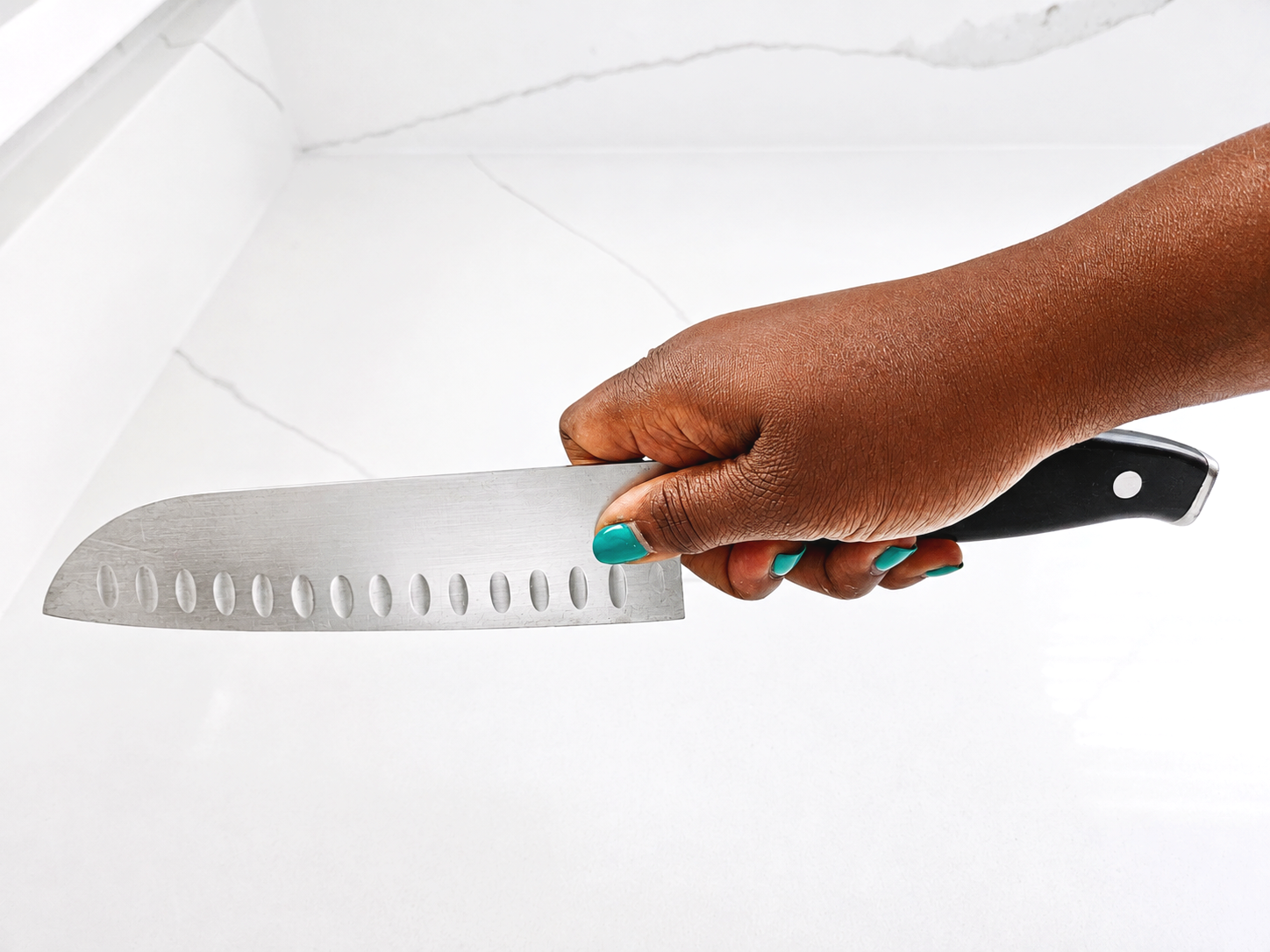
Wüsthof Classic 7-Inch Santoku Knife
German-style knives generally feel more substantial in the hand than many Japanese alternatives. They're particularly comfortable for cooks who use a rocking motion when chopping.
Why consider it
Solid feel
Traditional profile
Great for rock chopping
Versatile everyday knife
Established professional reputation
Chef's Take
If you want your knife to feel substantial and sturdy rather than featherlight, this is the category I'd explore. I personally have a WÜSTHOF Gourmet 7" Hollow Edge Santoku Knife in my collection.
Check Current Price → Chef Knife
Best Premium Japanese-Style Chef’s Knife: Shun Premier 8-Inch Chef’s Knife
Best for: Serious home cooks who want precision, craftsmanship, and a lighter cutting experience
Now we're getting into knives I genuinely enjoy owning. I have a Shun Premier 8-inch chef’s knife, and the experience is noticeably different from a traditional, heavier Western-style knife.
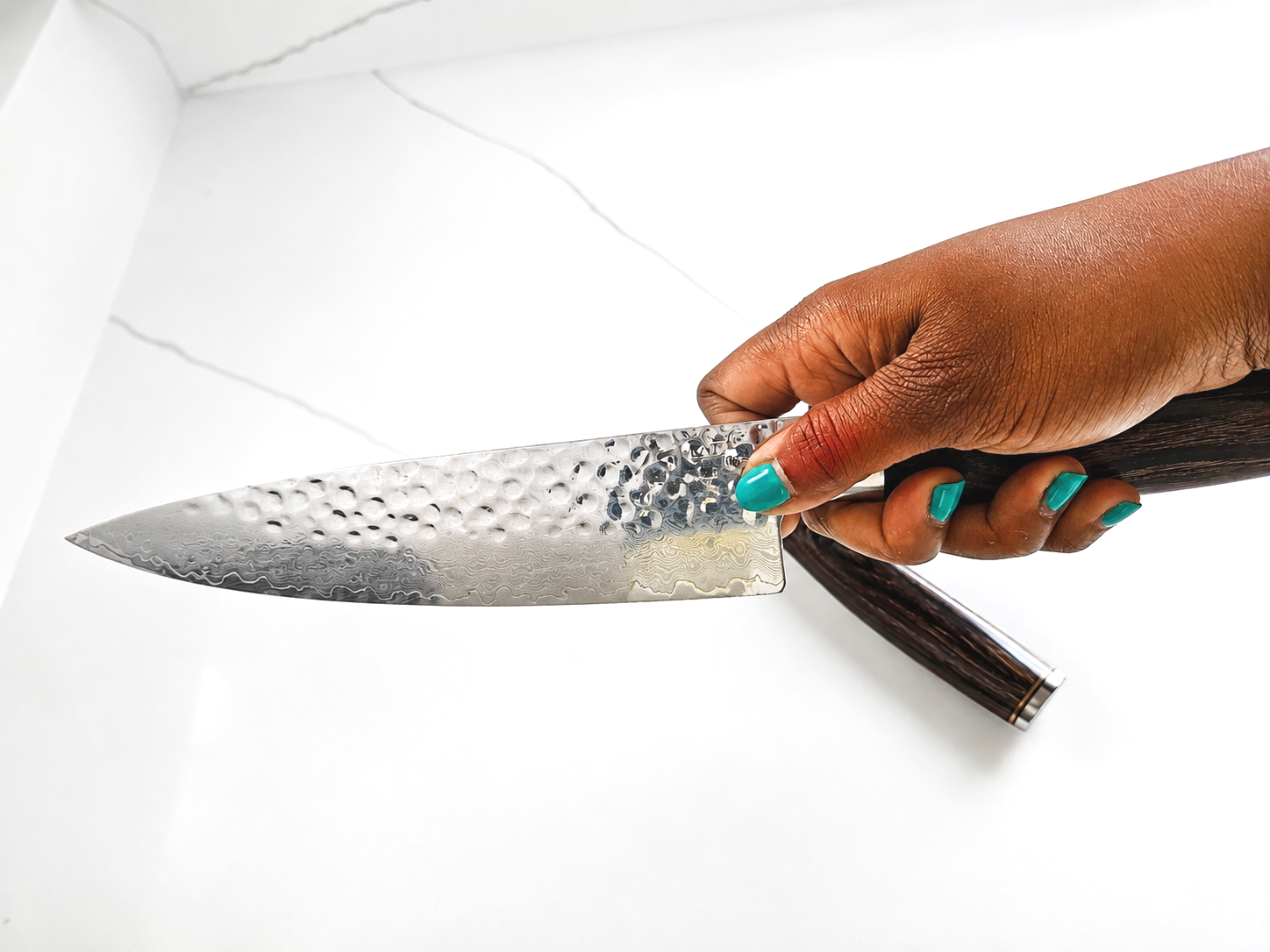
Shun Premier 8-Inch Chef Knife
The blade feels lighter and more refined. There's something satisfying about the way a thin, sharp knife moves through food with minimal resistance.
And then there's the appearance. Let's be fair. The Shun Premier is a beautiful knife.
Why I like it
Lightweight
Excellent precision
Thin cutting feel
Beautiful craftsmanship
Comfortable for detailed prep
Premium feel without being impractical
From My Knife Roll
Having both my F. Dick and my Shun Premier is actually a great example of why the German-vs.-Japanese knife debate doesn't need a winner.
My F. Dick gives me that traditional, dependable workhorse feeling. My Shun gives me a lighter, more precise experience. I like both. They just scratch different culinary itches.
Chef's Take
If you already have solid knife skills and want something that feels special every time you pull it out, this is where premium knives start making sense.
My Smaller Premium Pick: Shun Premier 6-Inch Chef’s Knife
Best for: Smaller hands, detailed prep, and cooks who want premium performance in a compact knife
Here's something my personal collection has taught me: You don't always need eight inches of knife.
I also own a Shun Premier 6-inch chef’s knife, and the smaller blade can be incredibly enjoyable for everyday prep.
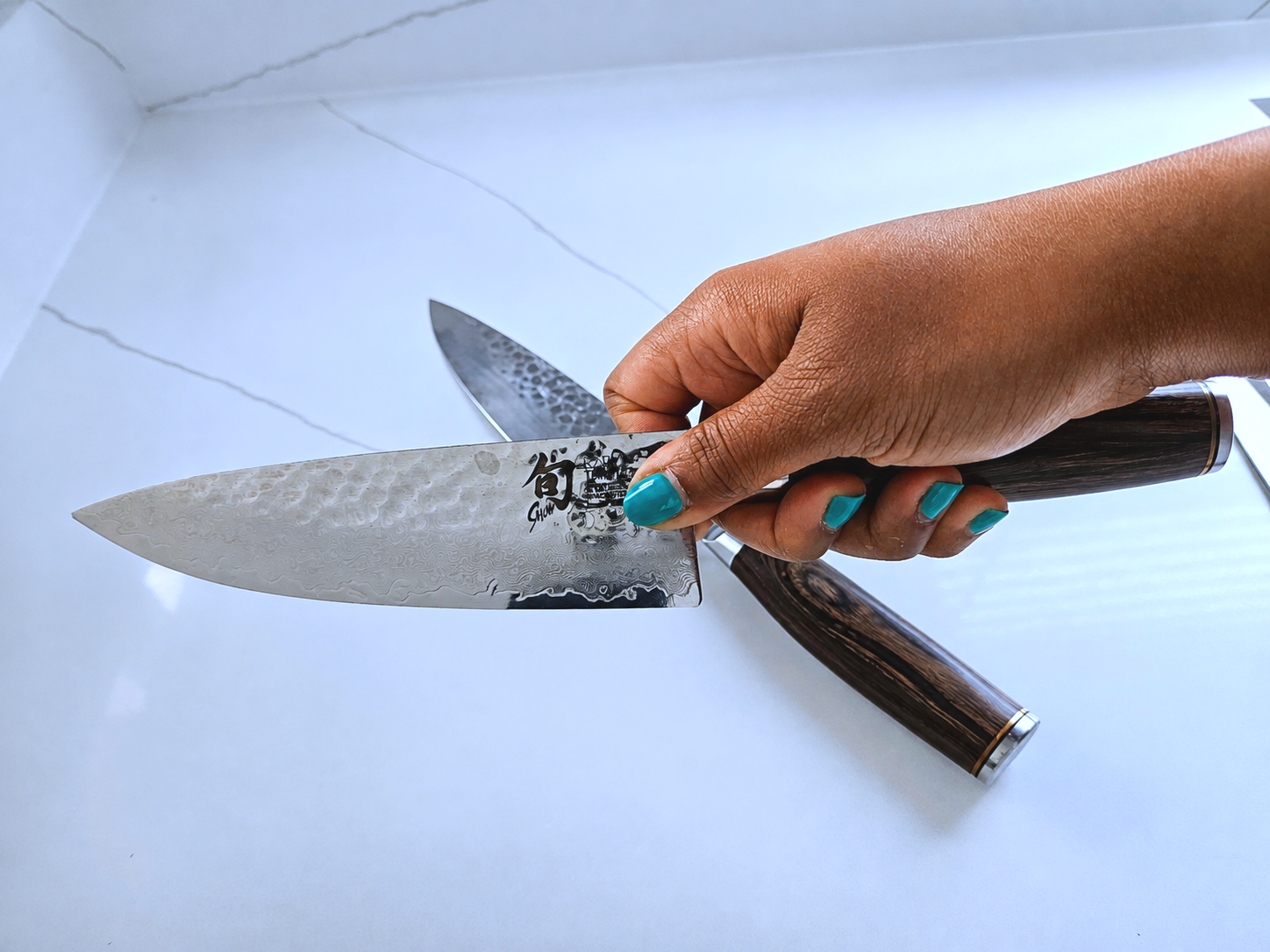
Shun Premier 6-inch Chef Knife
It offers many of the things I like about my 8-inch Shun: precision, lightness, and refinement, but in a more compact package. I especially appreciate smaller chef’s knives when I'm not breaking down a mountain of produce.
Why consider a 6-inch chef's knife
Easier to control
Great for smaller cutting boards
Nimble
Comfortable for detail work
Less intimidating for some cooks
And this is where my 5.5-inch Henckels and 6-inch Shun reinforce the same lesson: Knife size is personal. Don't automatically buy an 8-inch knife simply because that's considered “standard.”
Chef's Take
If the 8-inch Shun feels like more blade than you want, the 6-inch version may be your sweet spot.
Luxury Splurge: Miyabi Birchwood 8-Inch Chef’s Knife
Best for: Knife enthusiasts who appreciate premium materials and craftsmanship
At some point, chef's knives move beyond pure utility.
You're paying for:
Specialty steels
Advanced construction
Handle materials
Finishing
Aesthetics
Craftsmanship
And that's okay. Nobody needs a luxury chef's knife to produce great food.
My Shun knives certainly aren't necessary for me to cook professionally. I own them because I appreciate what they bring to the experience.
That's how I'd approach knives like the Miyabi Birchwood. Buy them because you genuinely appreciate them, not because you think expensive equipment makes you a better cook.
Chef's Take
Technique beats price every time, but beautiful tools can make cooking even more enjoyable.
So, Which Chef’s Knife Should You Buy?
Here's how I'd narrow it down.
-
Mercer Culinary Genesis
You get professional-level practicality without spending premium money.
-
Henckels Forged Accent 5.5-inch Chef’s Knife
A great reminder that smaller knives can still be incredibly versatile.
-
Victorinox Fibrox Pro
Functional, comfortable, and uncomplicated.
-
Misen 8-Inch Chef’s Knife
A nice stepping stone into more refined cutlery.
-
F. Dick 8.5-Inch Chef’s Knife
My own knife has been with me for more than 20 years, which tells you where I stand on its longevity.
-
MAC Professional
A strong entry into Japanese-style knife performance.
-
Wüsthof Classic
Substantial, dependable, and excellent for rock chopping.
-
Shun Premier 8-Inch Chef’s Knife
One I personally own and enjoy for its lighter, more precise feel.
-
Shun Premier 6-Inch Chef’s Knife
Another personal favorite when I want something compact and nimble.
-
Kyocera Revolution 5.5-Inch Ceramic Santoku
Not your first or only knife, but sometimes you buy a kitchen tool simply because you want to try it. I'm living proof.
What My Own Knife Collection Has Taught Me
If you looked at my knives expecting them all to be the same size, style, or price point, you'd probably be surprised.
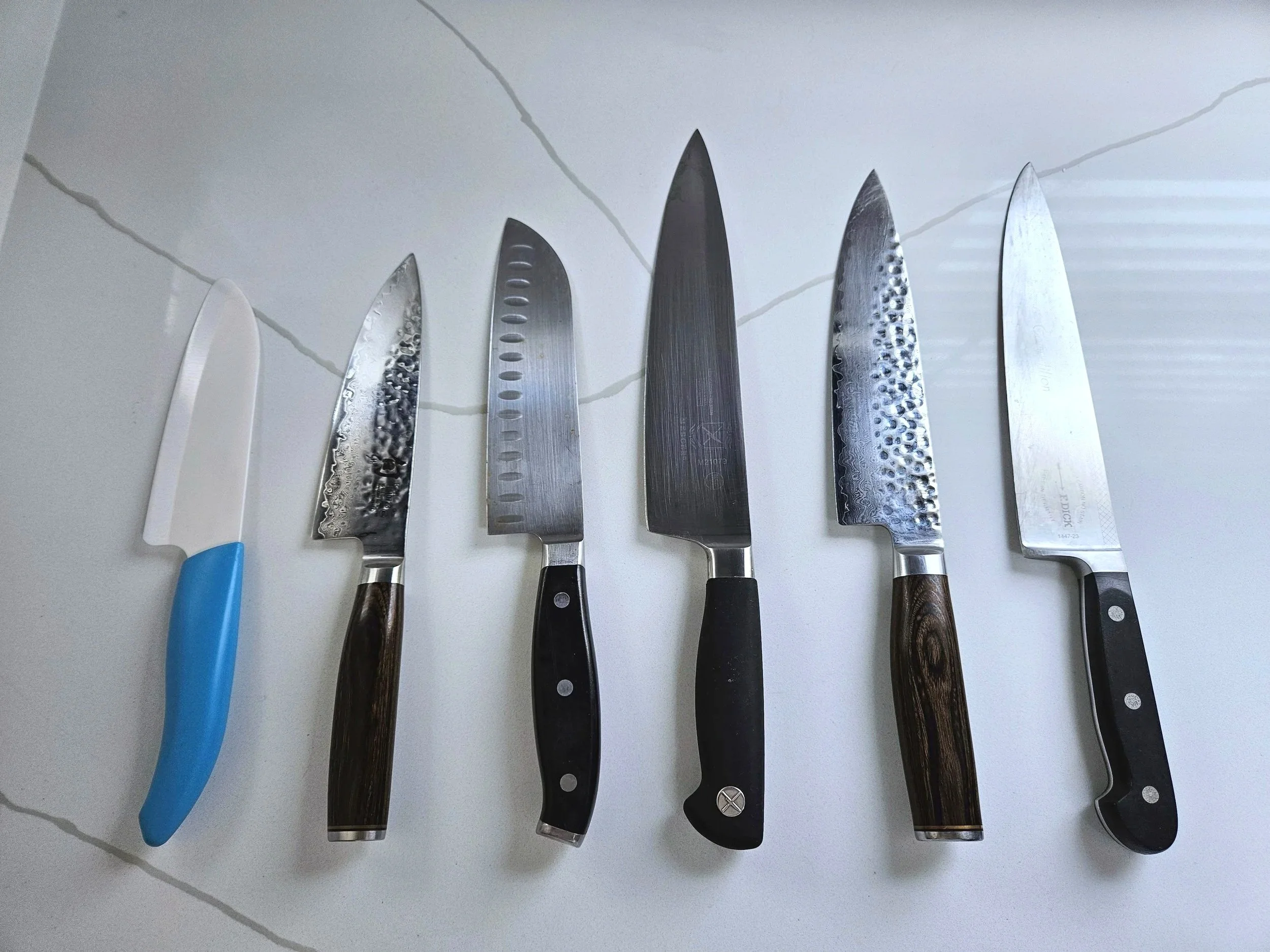
Chef Knives on Display
I own:
A 9-inch Mercer
An 8.5-inch F. Dick
An 8-inch Shun
A 6-inch Shun
A 5.5-inch Henckels
A 5.5-inch ceramic Kyocera santoku
That's because there's no single knife specification I believe every cook needs. Different knives serve different purposes. And over time, your preferences may change.
When you're new to cooking, durability and affordability may matter most. As your knife skills improve, you may begin noticing blade geometry, balance, weight, and edge retention.
Eventually, you might buy something simply because it's beautiful or interesting. That's part of developing your own kitchen.
The 30-Second Chef Check
Before buying your next chef’s knife, ask yourself:
✓ What blade length actually feels comfortable?
✓ Do I prefer a heavier workhorse or a lighter precision knife?
✓ Do I mostly rock, push-cut, or slice?
✓ Am I willing to maintain a premium edge?
✓ Am I buying this because it improves my cooking—or because I simply love it?
And here's one more:
✓ Would I still feel comfortable actually using it?
Because the best chef's knife isn't the one you admire in the knife block. It's the one you reach for when it's time to cook.