How to Choose the Right Chef’s Knife for Your Hand and Cooking Style
A chef’s knife may be the most-used tool in your kitchen, but choosing the right one can feel overwhelming. With so many blade lengths, handle shapes, weights, and knife styles available, it is easy to assume that the most expensive or popular option is automatically the best.
As a professional chef, I can tell you that the best chef’s knife is not determined by brand recognition or price. It is the knife that feels comfortable in your hand, matches your natural cutting motion, and handles the foods you prepare most often.
In this guide, you will learn how to compare blade length, weight, balance, handle design, and Western versus Japanese-style knives so you can choose a chef’s knife that makes cooking safer, easier, and more enjoyable.
Disclosure: This post may contain affiliate links. If you purchase through one of these links, I may earn a commission at no additional cost to you. Prices change frequently, so always check current pricing before purchasing.
A quick knife-selection chart
Start With the Right Blade Length
Most chef’s knives have blades between 6 and 10 inches long.
6-Inch Chef’s Knife
A 6-inch knife is compact, lightweight, and easy to maneuver. It may be a good choice if you:
Have smaller hands
Feel intimidated by larger knives
Have limited counter or cutting-board space
Mostly prepare fruits, vegetables, herbs, and smaller proteins
The tradeoff is that the shorter blade may feel less efficient when cutting large ingredients such as cabbage, squash, watermelon, or large cuts of meat.
8-Inch Chef’s Knife
An 8-inch chef’s knife is the most versatile option for many home cooks. It offers enough length for larger ingredients while remaining manageable for everyday prep.
This size works well for:
Chopping vegetables
Slicing meat
Mincing herbs
Cutting poultry
General meal preparation
Chef’s Personal Recommendation: For most home cooks, I suggest starting with anywhere between a 6- and 8-inch chef’s knife that feels balanced and comfortable in a pinch grip. Before focusing on brand or price, test the handle, weight, and knuckle clearance.
10-Inch Chef’s Knife
A 10-inch knife provides more cutting surface and can make large-volume prep more efficient. It may work well if you:
Have larger hands
Regularly prepare large quantities of food
Cut large vegetables or portions of meat
Prefer a longer, heavier knife
However, it may feel cumbersome in a smaller kitchen or uncomfortable for someone who prefers a lighter tool.
Consider the Size of Your Hand
The knife handle should feel secure without forcing your hand into an unnatural position.
When holding the knife, notice whether:
Your fingers fit comfortably around the handle
Your knuckles have enough clearance above the cutting board
The handle feels secure without requiring a tight grip
Your wrist remains relaxed
You can control the blade without excessive effort
A handle that is too thick may be difficult for smaller hands to grip. A handle that is too narrow may feel unstable in larger hands. You should not need to squeeze the handle tightly to control the knife. A properly fitted knife allows you to maintain a relaxed, confident grip.
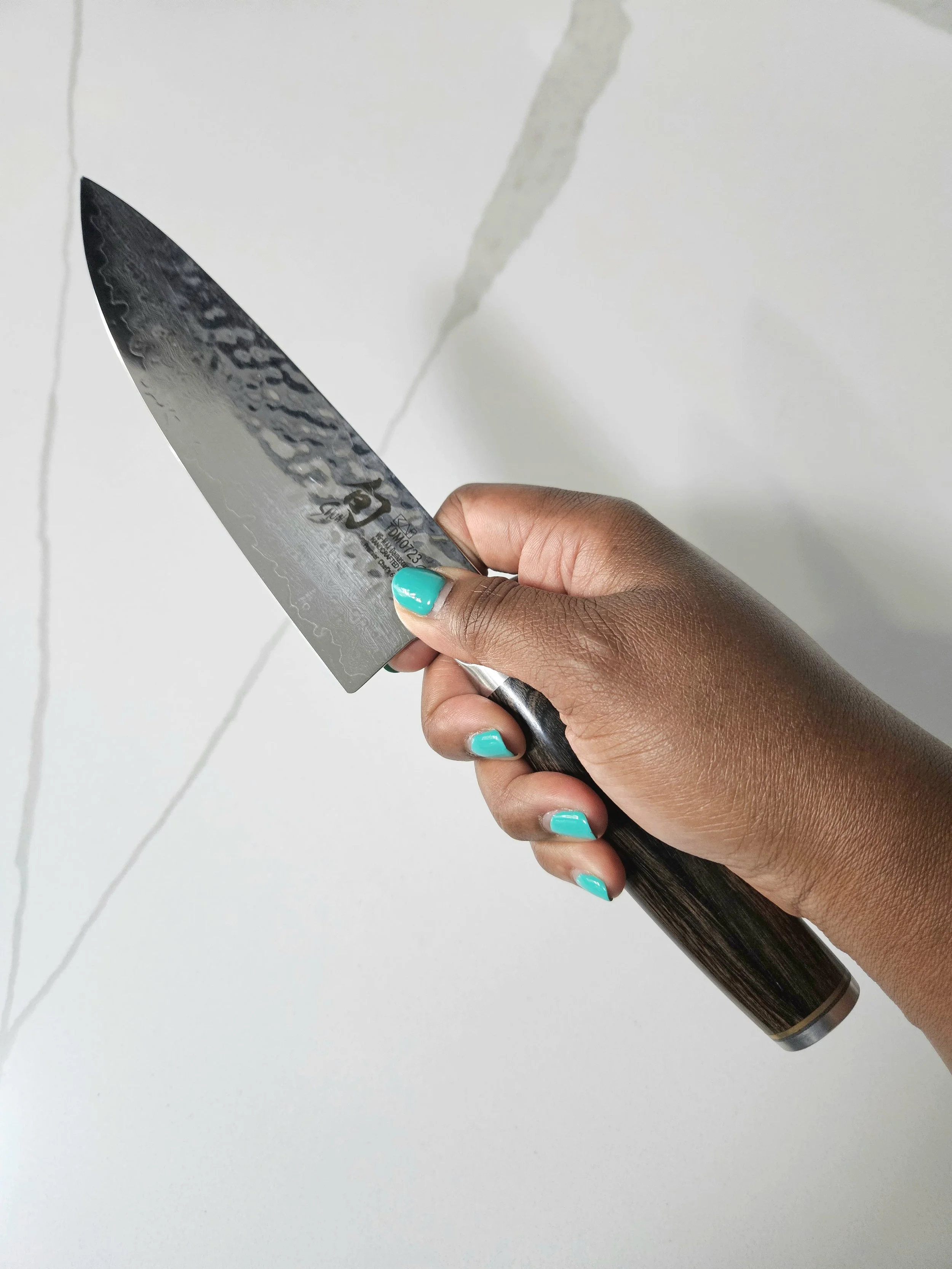
Close-up of a hand with teal nails holding a Shun Premier 6-Inch Chef Knife against a bright white marble countertop.
Pay Attention to the Handle Shape
Knife handles come in many shapes and materials, including wood, plastic, composite materials, and metal.
Rounded Handles
Rounded or oval handles can feel comfortable during long prep sessions because they do not have sharp edges pressing into the hand. However, very smooth handles may become slippery when wet.
Contoured Handles
Contoured handles are shaped to guide your fingers into a particular position. Some cooks appreciate the added security, while others find that the shape does not match their hand comfortably.
Straight or Traditional Handles
Straight handles allow more freedom in how you hold the knife. They are often found on Japanese-style knives and may work well for cooks who use a pinch grip.
Whenever possible, hold the knife before purchasing it. A handle that looks comfortable online may feel completely different once it is in your hand.
Think About Your Cutting Style
Your preferred cutting motion can help determine which blade shape will work best for you.
Rocking Motion
Do you keep the tip of the knife near the cutting board while rocking the blade forward and backward?
A Western-style chef’s knife with a curved blade may feel most natural. The rounded belly allows the knife to move smoothly through ingredients while maintaining contact with the board.
This style works particularly well for:
Mincing herbs
Chopping onions
Cutting celery
Repetitive vegetable prep
Up-and-Down Chopping
Do you lift the knife and bring it straight down through the food?
You may prefer a flatter blade profile, such as a santoku or Japanese-style chef’s knife. The flatter edge makes more contact with the cutting board during each cut.
This style works well for:
Precise vegetable cuts
Slicing boneless proteins
Chopping herbs
Preparing smaller ingredients
Push Cutting
Push cutting involves moving the knife slightly forward and down through the ingredient rather than rocking it.
A thinner Japanese-style blade can perform especially well with this technique, offering smooth, precise cuts with less resistance.
Choose the Right Weight
Some chef’s knives feel substantial and heavy, while others are noticeably light.
Heavier Knives
A heavier knife can use its own weight to help cut through dense ingredients. It may feel reassuring and powerful when working with:
Root vegetables
Large squash
Thick cuts of meat
High-volume meal prep
However, extra weight can cause hand or wrist fatigue during longer cooking sessions.
Lighter Knives
A lighter knife may feel faster and easier to maneuver. It can be helpful for:
Detailed knife work
Quick vegetable prep
Smaller hands
Cooks with limited wrist strength
Neither option is automatically better. The goal is to find a knife that feels controlled, not one that feels as though you are fighting against its weight.
Check the Knife’s Balance
Balance refers to how the knife’s weight is distributed between the blade and handle.
To test it, hold the knife using a pinch grip, with your thumb and index finger gently pinching the blade just in front of the handle. The knife should feel stable rather than pulling strongly toward the blade or handle.
Some cooks prefer a blade-heavy knife because it adds power to each cut. Others prefer a neutral or handle-heavy balance for greater maneuverability.
The best balance is the one that allows you to guide the knife comfortably and confidently.
Western-Style vs. Japanese-Style Chef’s Knives
Understanding the general differences between Western and Japanese knives can help narrow your options.
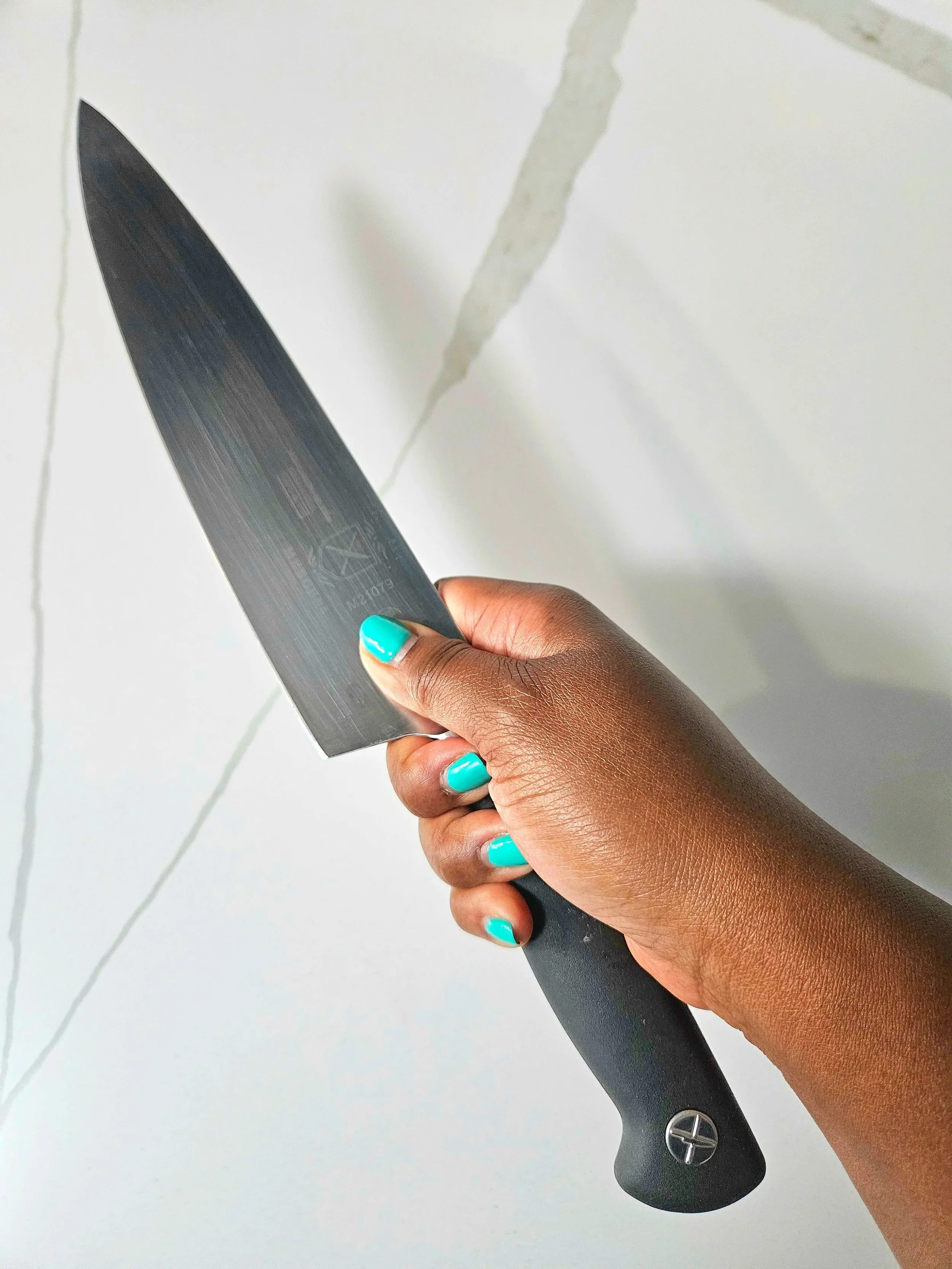
Western-Style Knives
Western chef’s knives are typically:
Heavier
Thicker
More curved
Designed for rocking motions
Made with slightly softer, more durable steel
They are often forgiving and versatile, making them a practical choice for everyday home cooking.
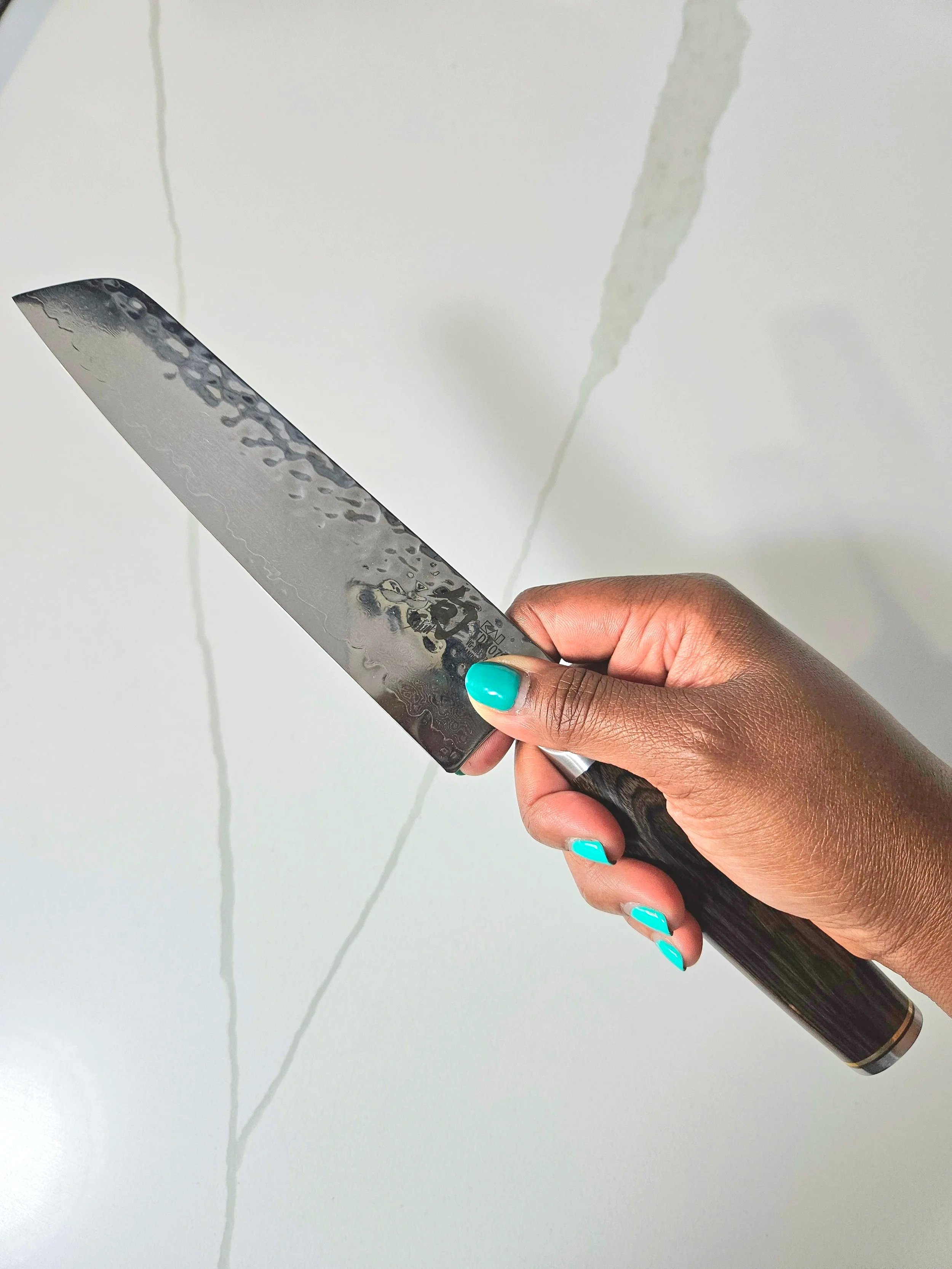
Japanese-Style Knives
Japanese chef’s knives are often:
Lighter
Thinner
Sharper
Flatter along the cutting edge
Made with harder steel
They can produce extremely precise cuts but may require more careful handling. The thinner edge can be more vulnerable to chipping if used on bones, frozen foods, or very hard ingredients.
There are exceptions within both categories, so focus on how the individual knife feels rather than relying only on its country or style of origin.
Match the Knife to the Way You Cook
Your usual menu should influence your decision.
For Vegetable-Heavy Cooking
Look for a knife that is relatively light with a thin blade and good knuckle clearance. A santoku, vegetable cleaver, or lightweight chef’s knife may make repetitive chopping more comfortable.
For Meat and Poultry
A slightly heavier Western-style chef’s knife can provide more stability when portioning boneless meats or breaking down poultry.
A chef’s knife should not replace a cleaver when cutting through large bones.
For Large-Batch Meal Prep
An 8- or 10-inch knife may help you work more efficiently. Look for a comfortable handle, balanced construction, and enough blade length to cut through large vegetables in fewer strokes.
For Precision Cooking
A lighter Japanese-style knife may provide the control needed for thin slices, delicate garnishes, and refined vegetable cuts.
For General Home Cooking
A balanced 8-inch chef’s knife with a comfortable handle is often the most practical all-purpose choice.
Consider How Much Maintenance You Want
A knife is only effective when it is sharp. Some harder steels hold their edge longer but may require special sharpening techniques. Softer steels may need more frequent honing and sharpening, but can be easier to maintain.
Before purchasing, consider whether you are willing to:
Hand-wash and immediately dry the knife
Use a honing rod when appropriate
Sharpen the blade regularly
Avoid glass, stone, or ceramic cutting boards
Store the knife in a block, sheath, drawer insert, or magnetic strip
Even an excellent knife will perform poorly if it is dull or damaged.
Test the Knife Before Buying
Whenever possible, visit a kitchen store and hold several knives.
Use a safe pinch grip and pay attention to the following:
Does the handle fit your hand?
Does the knife feel too heavy or too light?
Can your knuckles clear the cutting surface?
Does your wrist remain in a comfortable position?
Does the knife feel stable when you mimic your usual cutting motion?
Some retailers may allow you to test knives by cutting a potato, carrot, or another ingredient. A few minutes of testing can tell you more than hours of reading online reviews.
Chef’s Tip: Comfort Matters More Than Brand Recognition
Professional chefs do not all use the same knife. Some prefer heavy German-style knives, while others prefer thin Japanese blades. Many chefs also change knives depending on the task. Do not choose a knife solely because it is popular, expensive, or used by someone you follow online. Start with comfort, control, and compatibility with your cooking habits. A moderately priced knife that fits your hand can serve you better than a premium knife that feels awkward.
Final Thoughts
The right chef’s knife should feel like a natural extension of your hand. It should help you work more safely, efficiently, and confidently, not make cooking feel more difficult. For many home cooks, a balanced 8-inch chef’s knife is an excellent starting point. However, hand size, cooking style, blade shape, weight, and handle design all matter. Take your time, hold several options, and choose the knife that feels best to you. The right fit can make everyday meal preparation smoother and much more enjoyable.